

Video analysis for fitness is the process of recording, reviewing, and annotating movement footage to identify technique errors, track client performance over time, and deliver targeted coaching feedback.
It gives coaches and clients a clearer view of what is actually happening during a movement, rather than relying entirely on what the movement felt like.
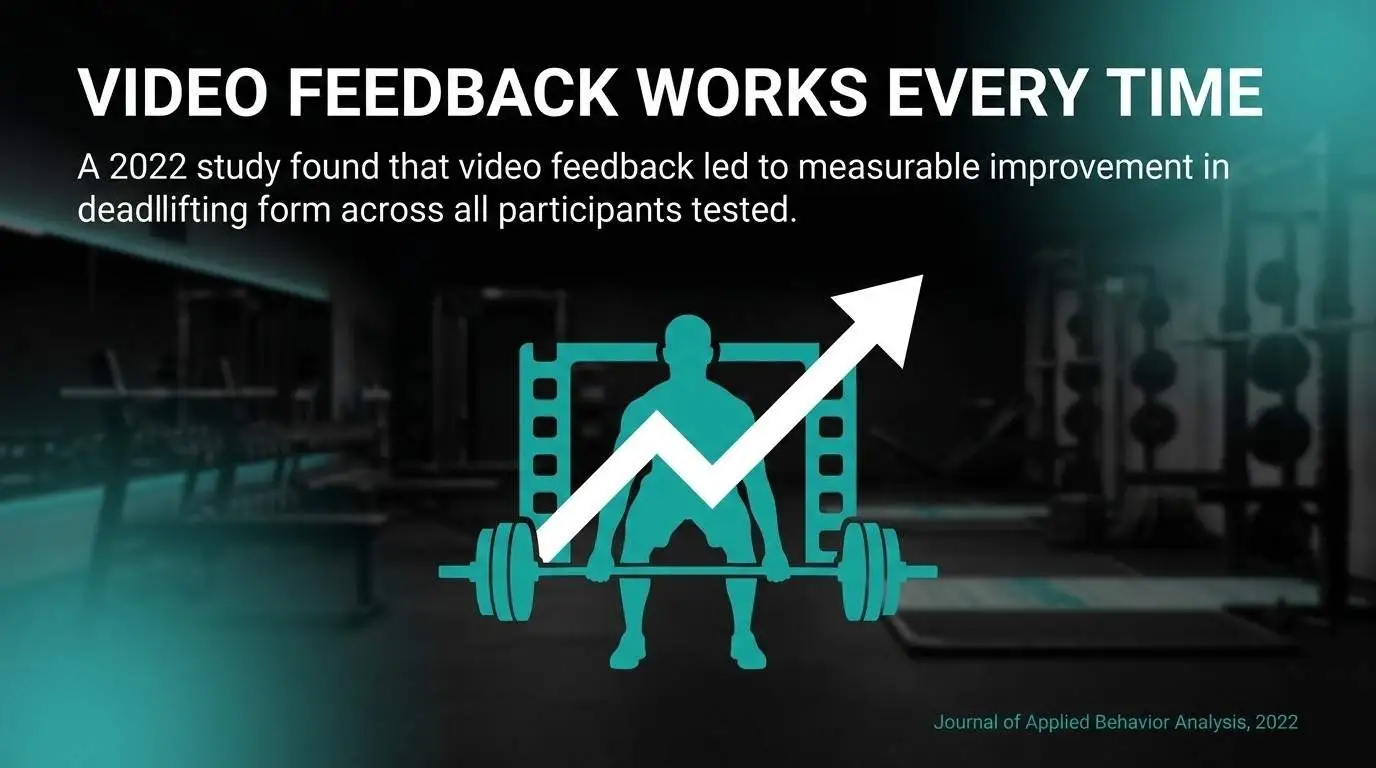
A 2022 video feedback study found that video feedback led to measurable improvement in deadlifting form across all participants tested. Every participant improved when they were able to see their own movement.
Most trainers give verbal cues and hope for the best. Video analysis removes the guesswork entirely.
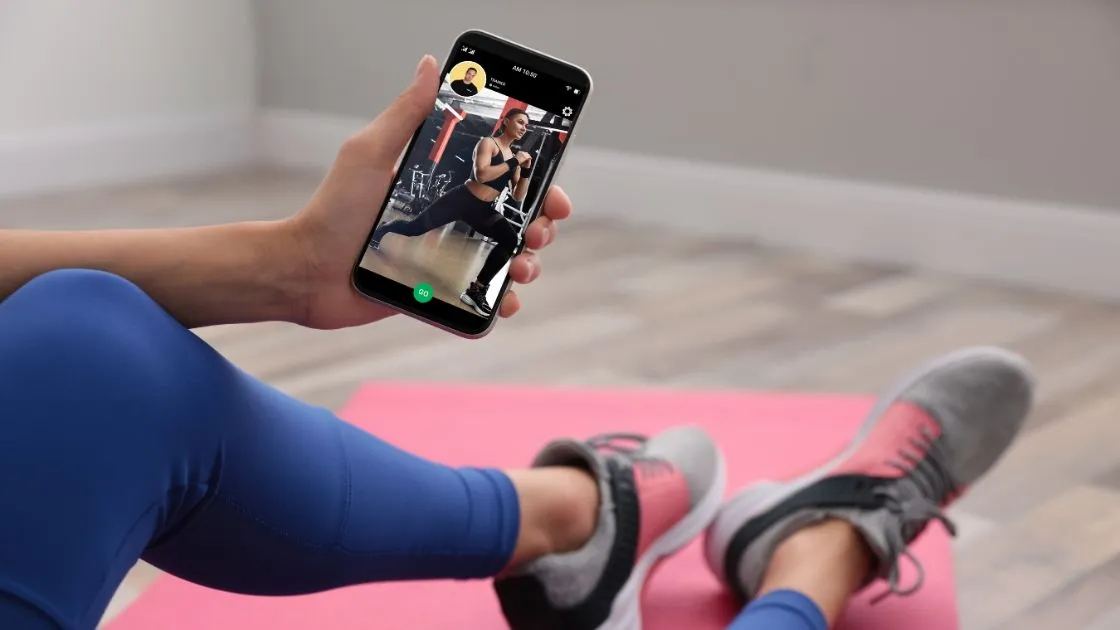
For online and hybrid coaches, it can be particularly valuable. With PT Distinction, clients can record their exercise technique through the client app and send the video directly to their trainer for review. This means technique feedback can become part of the normal coaching experience without asking clients to switch between different apps and tools.
This guide explains how video analysis for fitness works, which disciplines benefit most, how coaches and clients can use it, how to record useful footage, and how to build video feedback into a scalable coaching workflow.
Video analysis for fitness is the structured review of recorded movement to assess technique, identify compensations, and deliver precise coaching feedback based on visual evidence rather than memory or perception.
The UK Sports Institute defines performance analysis as a specialist discipline involving systematic observation of athletic performance. In plain terms, it means watching movement with a purpose.
The gap between what athletes feel and what they are actually doing is wider than most people expect. A client who swears their knees are tracking over their toes might have a 15-degree valgus collapse on every rep. Without video, that correction never happens with the precision it deserves.
This matters for both in-person and remote coaching. When your clients train without you, video analysis is the closest thing to being in the room with them. It is the backbone of effective virtual training delivery.
The process is even easier when it sits inside the client’s normal coaching experience. In PT Distinction, your clients can record exercise technique through the app and send it directly to their trainer for review, helping online and hybrid coaches provide technique feedback remotely.
Sports video analysis can be applied across almost every fitness discipline, but some sports and training styles see particularly high returns because technique has such a significant influence on performance.
Strength training is the most obvious application. Powerlifting, Olympic weightlifting, and general resistance training all involve complex multi-joint patterns where small form errors compound under load. A coach can watch a squat at 60% and catch the early morning rise that will become a genuine problem at 90%.
Running mechanics benefit enormously from slow motion review. Overstriding, hip drop, and excessive vertical oscillation are almost impossible to see in real time. Frame-by-frame playback makes them obvious in seconds.
Swimming, gymnastics, and martial arts have long used sports video analysis at elite levels. Those disciplines are now far more accessible to coaches at every level. Yoga and Pilates instructors are also applying video analysis for fitness to check spinal alignment and joint positioning that clients simply cannot self-assess.
Team sports coaches use multi-angle recording to review both individual technique and collective movement patterns. A basketball shooting coach and a soccer conditioning specialist are solving very different problems with the same core tool.
Coaches who use video analysis systematically replace subjective memory with objective visual evidence, which makes their feedback faster, more precise, and far easier for athletes to act on.
The standard coach workflow looks like this:
A client records a movement during training and submits the footage to their coach. The coach reviews the video, identifies the most important technique issues and provides focused feedback for the client’s next session.
The client can then apply the correction, record the movement again and allow the coach to review the change.
PT Distinction makes this particularly useful for remote coaching because clients can record exercise technique through their app and send it directly to their trainer for review. The video doesn’t need to exist separately from the rest of the coaching relationship.
The technology is only part of effective video coaching. The quality of the coach’s feedback still matters.
For example, instead of simply saying “your squat needs work”, explain specifically what you want the client to focus on during their next session.
For most online coaches, the priority is much simpler: make it easy for clients to record movement, send it to their coach and receive useful feedback.
Technique doesn’t exist in isolation.
A coach may notice something in a client’s video that influences exercise selection, programming, progression or future assessments.
Keeping communication alongside the rest of the client’s coaching information makes it easier to act on what you see.
PT Distinction combines client communication with workout programming, assessments, results tracking and other coaching tools, so trainers can keep feedback connected to the wider client journey rather than managing conversations across multiple platforms.
Video isn’t only useful when the coach is watching.
Clients who learn to review their own footage can develop better technique awareness and become more capable of recognising the difference between how a movement feels and how it actually looks.
The key is to give clients something specific to look for.
A strength client reviewing a squat might focus on knee tracking, depth and chest position. A runner might review foot strike, hip position and arm movement.
Two or three clear points are generally more useful than simply telling a client to “watch the video and see what you notice.”
Over time, this process can help clients build a stronger connection between what good movement looks like and what it feels like while they are performing it.
The best client-focused coaching techniques build self-awareness alongside skill, and video analysis does both.
You don’t necessarily need dedicated video analysis software or expensive equipment to start reviewing client technique.
For most personal trainers, the priorities are:
For online and hybrid coaches, keeping video feedback within the same environment clients already use for their training can remove friction.
For coaches building their own fitness brand, PT Distinction also offers custom branded fitness apps, giving clients a professional coaching experience built around the trainer’s own business and brand.
Good video analysis starts with good footage, and most recording mistakes are simple to avoid.
The camera angle determines what the coach can and cannot see.
For many compound lifts, a 45-degree front-side angle can capture useful information from multiple planes. A side view can be particularly useful for hip hinge mechanics, running gait and squat depth, while a front-on view can help show knee tracking, shoulder position and lateral asymmetries.
Keep the camera stable using a tripod, phone stand or other secure surface.
Position it far enough away that the client’s full movement remains in frame throughout the complete range of motion.
The best angle will depend on what the coach is trying to assess, so clients should be given clear instructions before recording.
Record at 60 frames per second minimum for any movement with a fast-phase component. Sprinting, jumping, explosive lifts, and most dynamic sport skills require higher frame rates to produce usable slow motion footage. Most modern smartphones handle 60fps well, and many shoot at 120fps or 240fps for true slow-motion capture.
Lighting is underrated. A well-lit athlete filmed against a plain background shows joint positions and movement patterns far more clearly than footage taken in a dim gym corner with a patterned wall behind them.
Natural daylight or bright overhead lighting, no backlighting, and a clear background are the three things that separate usable footage from footage you have to squint at.
Video analysis can help coaches identify movement patterns and technique breakdowns that may otherwise be difficult to spot, particularly when clients train independently.
The National Safety Council’s gym injury statistics show an estimated 564,845 exercise-related injuries in the US in 2024.
Separate research on unsupervised training injuries found that 73.1% of fitness-related injuries occurred during unsupervised gym-based activities.

Video feedback gives coaches another way to observe clients who aren’t training with them in person.
It should not be treated as a substitute for appropriate medical assessment or diagnosis, but it can help coaches monitor technique and make appropriate training adjustments within their scope of practice
Establishing a movement baseline can make future video reviews much more useful.
Record key movements when a client begins their training and, where appropriate, repeat the same movements from similar angles later in the programme.
This gives the coach a reference point when assessing how movement has changed over time.
PT Distinction also includes built-in movement screen assessments. Clients can record their movements for their trainer to review, helping coaches gather useful information when building programmes around an individual’s needs.
Combined with workout results, exercise history, assessments and other client information, this can give trainers a much broader view of progress than relying on one metric alone.
Adding video feedback to your coaching doesn’t require an expensive sports science setup. What matters most is creating a clear process that both you and your clients understand.
Decide how clients will record videos, where they will submit them and how you will provide feedback.
The simpler this process is, the more likely clients are to use it consistently.
Your clients using PT Distinction can record exercise technique through the client app and send it directly to their trainer for review, helping keep technique feedback inside the same coaching system used for their training.
Record new clients performing the movements you want to monitor during the early stages of their programme.
This gives you a reference point for future reviews.
Make sure the movement, camera position and recording conditions are reasonably consistent if you intend to compare footage over time.
You don’t need clients to record every exercise in every workout.
Instead, identify movements that would benefit most from technique review and ask clients to submit them at appropriate intervals.
One focused submission creates a manageable feedback loop and encourages clients to record with a clear purpose.
Because PT Distinction clients can record exercise technique within the app, video submissions can become part of their normal training routine rather than another task requiring another platform.
Keep your feedback focused on the changes that will have the greatest impact.
Rather than listing every possible technical issue, give the client one or two things to concentrate on during their next attempt.
Combine video review with clear communication so clients understand both what needs to change and why.
PT Distinction’s client communication tools allow coaches to keep those conversations connected to the rest of the client’s coaching experience.
Return to earlier videos periodically and compare them with the client’s current movement.
Visible improvements in technique can be a powerful way of demonstrating progress, particularly when combined with improvements in workout performance and other tracked results.
PT Distinction allows coaches to monitor client results and exercise history alongside other areas of their coaching, helping build a broader picture of how a client is progressing.
The real value of video feedback comes from consistency.
Rather than treating it as an occasional extra, decide when technique reviews should happen as part of your coaching process.
For online and hybrid coaches, this can form part of a wider asynchronous coaching model. Clients complete their training independently, record relevant movements and receive feedback without every interaction requiring a scheduled video call or face-to-face session.
PT Distinction brings this together with programme delivery, assessments, client communication, progress tracking and automated coaching workflows, helping trainers deliver personalised coaching to more clients without needing every interaction to happen live.
For most personal trainers, a modern smartphone and a stable place to position it are enough to get started.
You don’t need broadcast-quality cameras or a dedicated studio. Good lighting, a clear camera angle and an unobstructed view of the movement matter more than expensive equipment.
PT Distinction's powerful personal trainer software allows your clients to record exercise technique through their client app and send the video directly to their trainer for review.
Filming is only the first step.
Video analysis means reviewing the footage with a specific purpose, identifying movement patterns or technique issues and using what you see to inform coaching feedback.
A video sitting unwatched on a client’s phone doesn’t improve technique. The value comes from the review and feedback that follows.
Yes. Video analysis is particularly useful for remote coaching because the trainer and client don’t need to be in the same place at the same time.
Clients can record movements while they train and send the footage to their coach for review.
PT Distinction supports this by allowing your clients to record exercise technique through the app and send it directly to their trainer, making video feedback part of the same environment used for their training and coaching.
There isn’t one schedule that works for every client.
A focused weekly submission can be useful when actively working on a particular movement, while less frequent reviews may be sufficient when technique is established.
The important thing is to have a clear reason for requesting the video and to provide feedback the client can apply during future sessions.
Video analysis is an accessible coaching tool for personal trainers.
Used effectively, it can help clients understand their movement, give trainers better information when coaching remotely and create a more useful feedback loop between sessions.
The key is making the process simple and repeatable: record the movement, review what happened, provide focused feedback and revisit it later.
For online and hybrid trainers, keeping this process alongside the rest of the coaching experience removes unnecessary friction.
PT Distinction makes exercise technique review part of your existing coaching system. Clients can record their exercise technique through the app and send it directly to you for review, while you manage their training programmes, assessments, results and communication from the same platform.
That means fewer disconnected tools for you and your clients, and more time focused on the coaching that actually improves results.
Ready to bring your online coaching into one place? Start your free 1-Month PT Distinction trial today.
Ready to join the family?
We'll get you up and running in no time. Start with our zero-risk free trial and build your personal training empire today.