


Most trainers price their services by the hour. It feels safe, it’s easy to explain, and clients understand it.
But hourly pricing puts a hard ceiling on your income and keeps you trading time for money indefinitely.
High-ticket personal training breaks that model. Instead of selling sessions, you sell a defined transformation over a fixed timeline.
Packages at this level typically range from $3,000 to $10,000+ in the US market, and the premium reflects the depth of support, not just the hours logged.
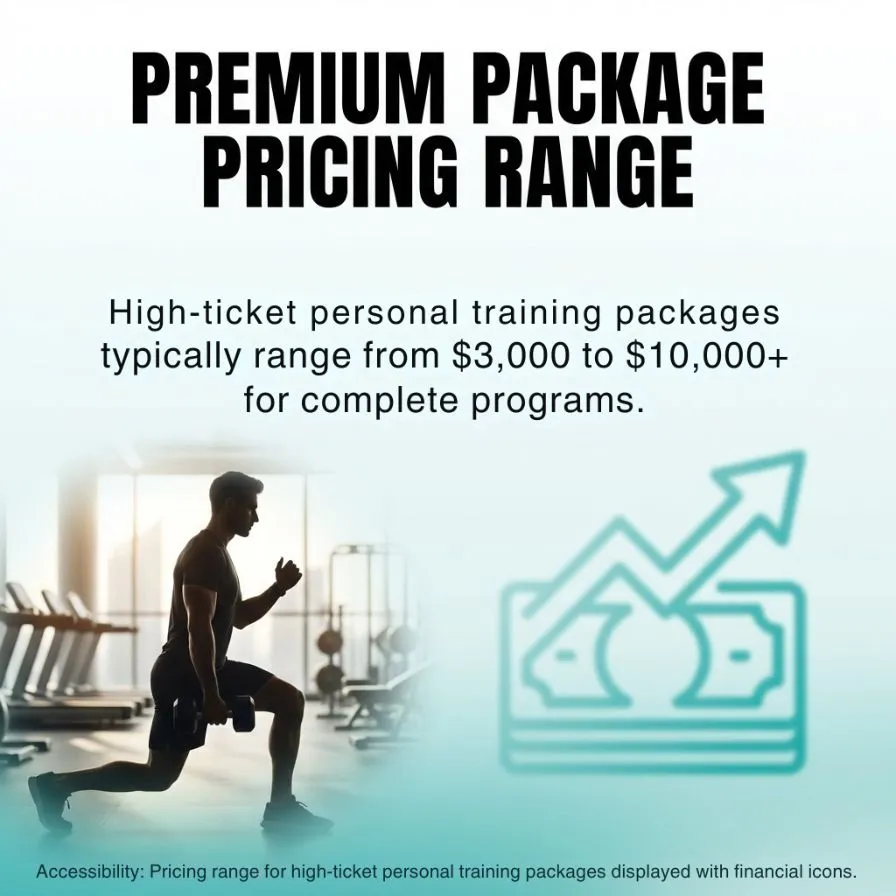
The personal training industry is growing at 8.7% per year, with demand expected to increase 13% by 2028, according to Fitness Mentors, making it one of the strongest windows in years to position yourself at the premium end of the market.
The difference comes down to what you deliver. Premium clients pay for guaranteed outcomes, not access to your calendar.
This guide walks you through building a high-ticket coaching program from scratch.
You’ll learn how to identify clients willing to invest at this level, structure transformational packages, and price based on value delivered.
By the end, you’ll have a clear framework for creating premium offers that attract serious clients and generate sustainable revenue.
High-ticket personal training moves entirely away from the session-based model. The focus shifts to complete transformations rather than weekly appointments.
The pricing reflects comprehensive support. According to NASM, experienced trainers charge $100–$150 per session, while high-ticket programs command $3,000-$10,000+ for complete 8-12-week transformations.
Three elements define premium packages:
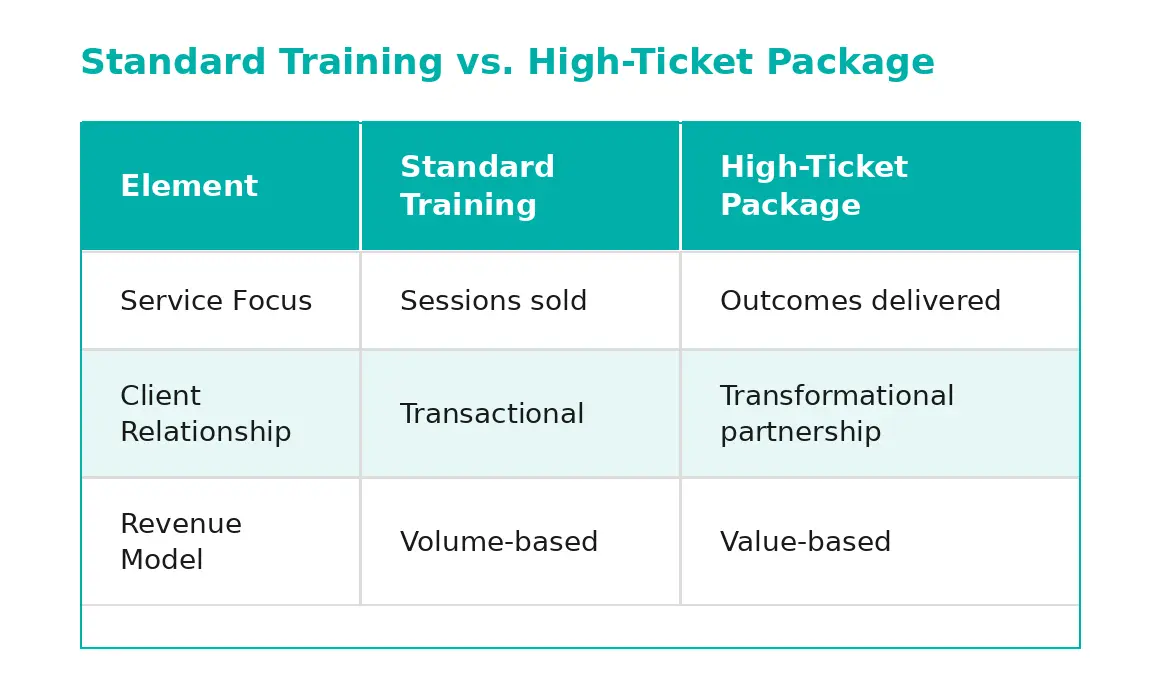
The value proposition shifts entirely. You’re not selling workouts. You’re selling the body, confidence, and lifestyle that clients can’t achieve on their own.
Premium packages include elements impossible in standard sessions: daily accountability, nutrition planning, habit coaching, and unlimited support.
Together, these create the kind of constant progress momentum that justifies premium pricing.
Your ideal client determines everything about your offer. Get this wrong and premium pricing feels impossible to justify.
Start with specific demographics and psychographics. Who has both the problem you solve and the budget to invest?
Profitable avatars often include busy professionals, post-pregnancy women, or executives over 40. These groups value results and time over cost.
Document these details:

The more specific your avatar, the easier it is to position as a premium. “Busy professional” is too broad. “Female director with two kids under 5 struggling to lose baby weight” is precise.
Certain signals indicate a willingness to invest in high-ticket coaching. Look for clients who already spend on premium services elsewhere.
They hire house cleaners, order meal prep, or pay for business coaching. That reveals a value-based spending mindset rather than cost-consciousness.
Premium clients also show decision urgency. They have an upcoming event, a health concern, or an identity shift driving immediate action.
That urgency makes them ideal candidates for transformation-focused programs.
Your high-ticket offer must align with demonstrated expertise. Clients invest premium amounts in specialists, not generalists.
Choose a transformation niche where you’ve delivered proven results. Postnatal recovery, medical weight loss, or strength-building for specific populations all work well.
PT Distinction is built around this approach, giving you the tools to deliver personalized coaching programs at scale without the admin overhead.
Premium pricing requires premium results. Your program must deliver specific, measurable transformations that clients can’t achieve elsewhere.
Vague promises kill high-ticket sales. Define exactly what clients will achieve by program completion.
Quantify the transformation wherever possible. “Lose 20–30 pounds” beats “get healthier.” “Fit into pre-pregnancy clothes” beats “tone up.”
Include both objective and subjective outcomes:
The transformation extends beyond fitness. Address how achieving these results changes clients’ entire lives.
Break the complete transformation into phases. This creates psychological wins and maintains momentum throughout the program.
A 12-week program might look like this:
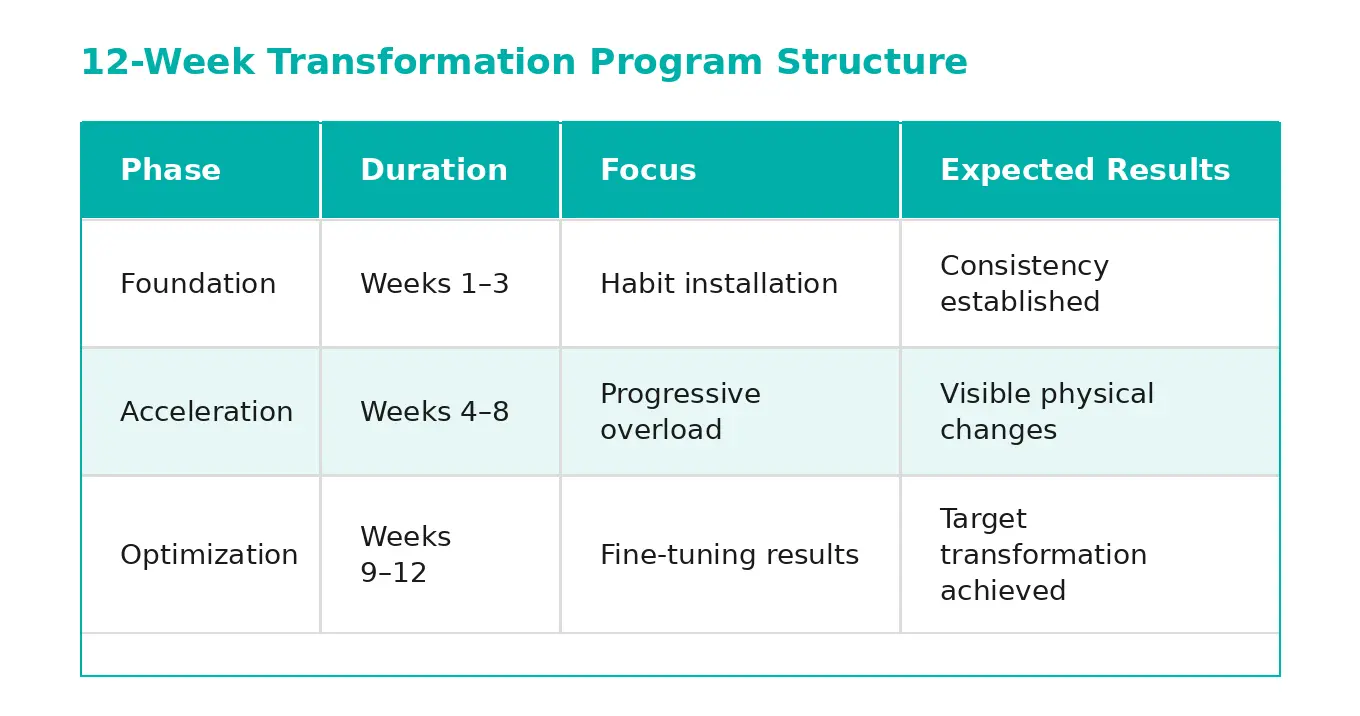
Each phase delivers specific wins. This prevents the “nothing’s happening” feeling that causes clients to abandon programs early.
What makes your approach uniquely effective? Premium clients pay for proprietary systems, not generic fitness advice.
Develop signature frameworks or processes. Name your methodology. Make it feel exclusive and grounded in evidence.
This doesn’t mean inventing new science. It means organizing proven principles into a systematic approach that clients can follow consistently.
Your program structure determines client results and your delivery efficiency.
Premium packages require comprehensive support without creating unsustainable time demands on your end.
Three main models work for high-ticket personal training, each with different advantages for you and your clients.
One-to-one coaching provides maximum customization and premium positioning. You work exclusively with each client, adjusting everything to their specific needs.
Small group coaching (3–8 clients) balances personalization with scalability. Clients benefit from community support while you serve multiple people simultaneously.
Hybrid models combine both. Clients receive individual check-ins plus group coaching sessions, maximizing personalization and peer accountability.
Your choice depends on your capacity and client preferences. One-to-one commands the highest pricing but limits volume.
Premium packages include multiple support layers. This comprehensive approach is what justifies high-ticket pricing and ensures client success.
Essential components include:
The combination creates constant momentum. Clients never feel abandoned between formal sessions.
Additional features differentiate your offer from standard training. Stack these strategically so each addition solves a specific obstacle to client success.
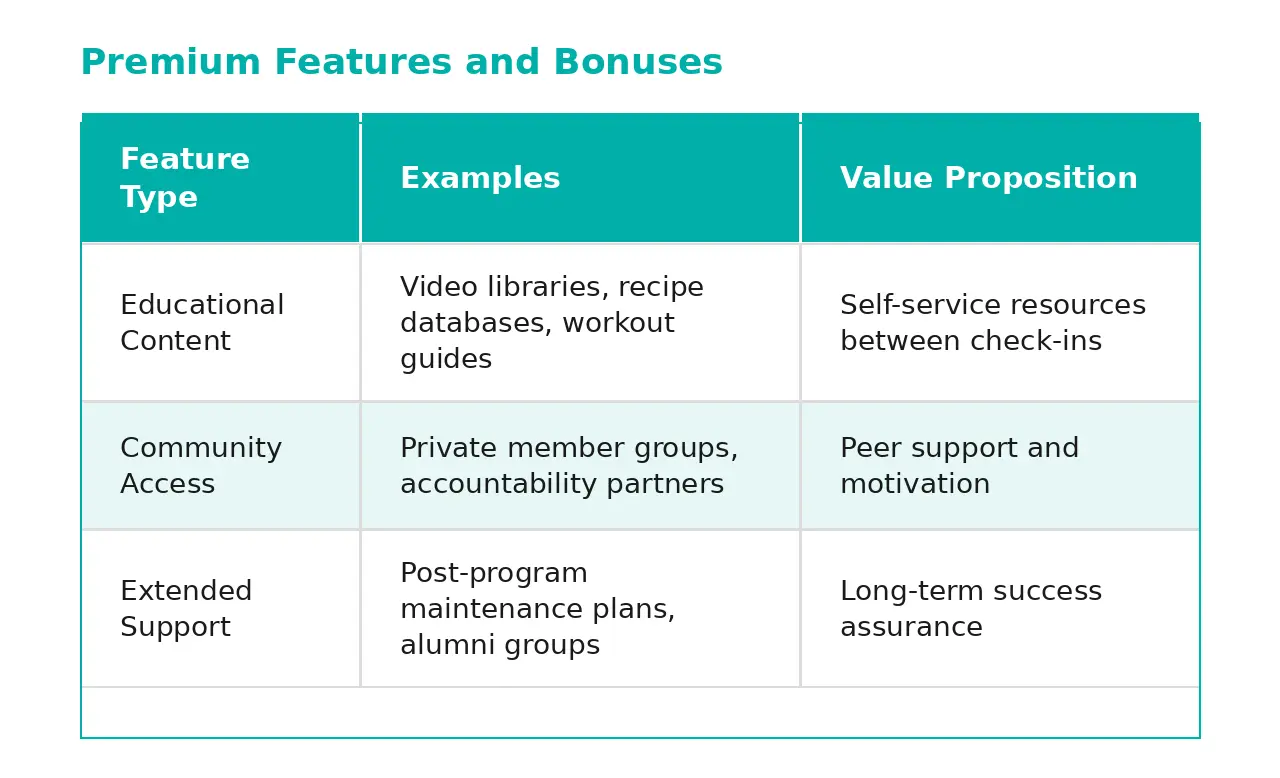
High-ticket programs demand consistent quality. Create systems that ensure every client receives exceptional service regardless of your daily capacity.
Document your onboarding sequence, weekly check-in format, and progress review process. Consistency builds trust and reduces delivery stress.
Technology platforms streamline premium delivery. Dedicated apps provide professional presentation while centralizing client communication, programming, and progress tracking.
PT Distinction is built specifically for this, letting you deliver a polished client experience without the admin overhead.
Pricing determines your positioning and the quality of your clients. Too low and you attract wrong-fit clients. Too high without justification and conversion stalls.
Value-based pricing focuses on client outcomes rather than your time investment. Start by asking: What is this transformation actually worth to your ideal client?
Industry data from Two-Brain Business shows high-ticket coaches routinely charge $2,500–$3,000 for an initial purchase, with many earning $3,000+ per month from individual clients.
Calculate the financial and emotional value of results. If a client lands a promotion because of newfound confidence, what is that worth?
If they avoid diabetes medication, what are the long-term savings?
Price as a percentage of delivered value. If the transformation provides $50,000 in tangible benefits, a $5,000–$10,000 investment feels reasonable.

This shift in perspective makes premium pricing more comfortable. You’re not overcharging. You’re offering exceptional ROI.
Multiple pricing tiers increase conversion by offering choice. Three options work best: good, better, best.
Example tier structure based on current US market rates:
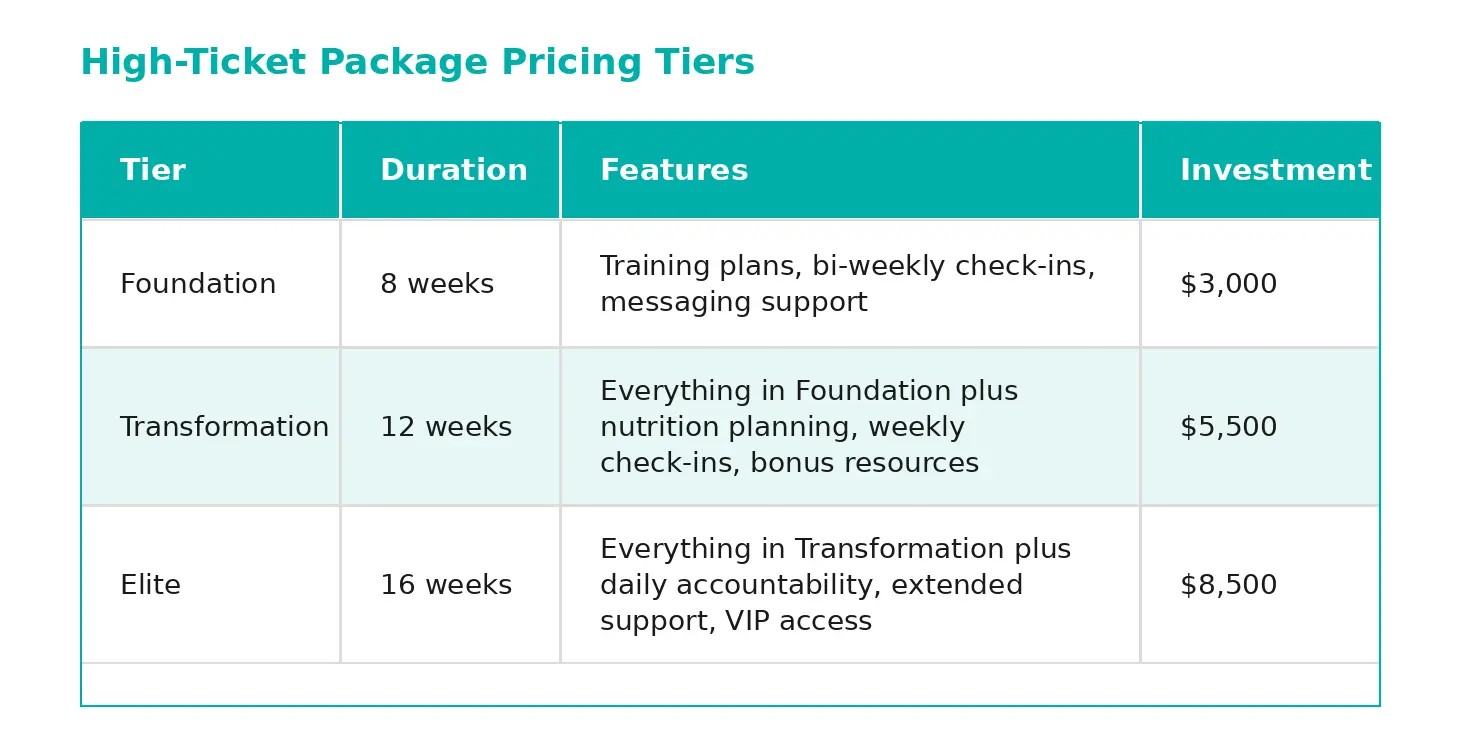
Most clients choose the middle option. The premium tier makes mid-tier pricing feel reasonable, while capturing clients who want maximum support.
Language matters when presenting premium pricing. Avoid defending or apologizing for your rates.
Frame the package as an investment in their future self. Compare it to the cost of inaction or failed DIY attempts.
Present pricing confidently after establishing value. Walk through transformation outcomes, program components, and support levels before mentioning the investment figure.
Offer flexible payment plans without discounting. Three- or six-monthly installments make premium packages accessible without devaluing your offer.
Premium packages require different marketing and sales approaches. Clients making a $5,000+ investment need more touchpoints and trust-building than standard training sign-ups.
High-ticket sales require established credibility. Clients won’t invest premium amounts in unknown fitness coaches.
Create content demonstrating expertise in your niche. Share transformation stories, educational posts, and methodology insights consistently.
Collect detailed testimonials from successful clients. Video testimonials carry more weight than text. Focus on specific results and transformation experiences rather than generic praise.
Case studies work exceptionally well. Document complete client journeys showing before-and-after results, challenges overcome, and life improvements gained.
Premium programs rarely sell through instant purchase buttons. The investment warrants a personal conversation.
Implement a consultation process. Offer complimentary discovery calls where you assess fit and present customized solutions.
This approach serves two purposes: it filters serious prospects from tire-kickers while building trust before asking for significant investment.
Structure consultations systematically:
High-ticket clients require targeted outreach. Mass marketing rarely attracts premium buyers.
Focus on platforms where your ideal clients already spend time. LinkedIn works well for professional audiences. Instagram suits lifestyle transformations.
Referrals drive high-ticket sales exceptionally. Satisfied clients naturally refer similar premium buyers from their networks.
Build a formal referral program with incentives for successful introductions, structured to avoid cheapening your premium positioning.
Strategic partnerships amplify reach efficiently. Connect with complementary professionals serving your ideal client avatar.
Your sales assets must match premium positioning. An amateur presentation immediately undermines high-ticket pricing.
Develop professional materials, including program overview documents, testimonial collections, and transformation portfolios. Every touchpoint should reflect the quality of experience clients can expect inside the program.
Successful premium programs eventually hit capacity constraints. Strategic scaling maintains quality while increasing revenue and impact.
Group coaching offers a natural path to scaling without sacrificing results. Small cohorts of 6–12 clients preserve personalization while multiplying revenue per hour.
Price group programs at 60–70% of one-to-one rates. Clients accept a slight reduction in exchange for peer community benefits.
The structure combines individual customization within group frameworks.
Everyone follows the same program phases with personalized adjustments.
Add community elements such as private groups, group coaching calls, and peer accountability partnerships to increase value.
Systematizing delivery creates consistency and reduces time per client. Document every aspect of your coaching process.
Create templated resources that you can customize for each client. Program frameworks, nutrition guides, and educational content become reusable assets.
Systematization doesn’t reduce personalization. It eliminates recreating foundational elements repeatedly, so you can focus on the custom application.
True scaling requires delegating delivery components. Start with administrative support. Virtual assistants handle scheduling, client communication, and program administration.
Eventually, bring on associate coaches. They deliver programming and check-ins in line with your methodology while you focus on sales and high-level strategy.
Maintain quality through comprehensive training systems. Your team must deliver consistent experiences that match your standards.
Complement high-ticket coaching with lower-touch offers. Digital products, self-paced courses, or membership communities serve clients who are not yet ready for a premium investment.
These also create natural progression paths. Course graduates become warm prospects for premium coaching.
Premium packages amplify both successes and missteps. Avoid these common errors that undermine high-ticket positioning and client results.
The biggest mistake is charging too little. New coaches often underprice out of fear of rejection or imposter syndrome.
Underpricing attracts wrong-fit clients who don’t value the service. It also makes sustainable business growth impossible.
Price based on transformation value, not your comfort level. Clients paying premium rates show up differently from bargain hunters.
Premium packages must promise specific transformations. Vague “better health” or “improved fitness” fails at high-ticket price points.
Clients invest in concrete results: losing 25 pounds, fitting into a wedding dress, and eliminating the need for medication.
Structure your entire offer around these specific outcomes. Every component should demonstrably contribute to the promised transformation.
Adding features doesn’t automatically increase value. Overwhelming clients with excessive content, meetings, and requirements backfires.
Simple, focused programs often deliver better results than complex ones. Clients need clear direction, not option paralysis.
Design for sustainable implementation. What can clients actually execute given their real-life constraints?
Not everyone qualifies as an ideal premium client. Wrong-fit enrollments create headaches regardless of the payment received.
Screen prospects carefully during consultations. Assess commitment level, coachability, and alignment of expectations.
Turn away poor fits confidently. One difficult client damages your energy, reputation, and ability to serve others well.
Accountability is what differentiates high-ticket programs from DIY approaches. Without it, clients could follow free YouTube workouts.
Build systematic accountability into your program. Regular check-ins, progress tracking, and course correction maintain momentum.
Read more on keeping clients motivated through structured support.
Premium pricing creates premium expectations. Every client touchpoint must reflect professional excellence.
From onboarding through completion, ensure smooth, impressive experiences. Delayed responses, disorganization, or amateur presentation all undermine high-ticket positioning. Invest in professional systems.
Branded apps, streamlined communication, and polished materials are part of the offer.
Desperation for sales leads to exaggerated promises. This creates inevitable disappointment and potential reputation damage.
Promise only transformations you’ve repeatedly delivered. Build buffer into timelines and outcome estimates.
Underpromise and overdeliver beats the opposite every time. Exceeding expectations creates loyal clients and a referral engine.
Base your price on the value of the transformation, not your time. In the US market, high-ticket packages typically start at $3,000 for an 8-week program and can reach $10,000+ for longer, more comprehensive offerings.
If the outcome you deliver is worth $50,000 to your client, a $5,000 investment is easy to justify.
Regular personal training sells sessions. High-ticket coaching sells a defined outcome over a fixed timeline, with comprehensive support built in: nutrition guidance, daily accountability, unlimited messaging, and progress tracking.
Clients aren't paying for access to your time; they're paying for a guaranteed transformation they can't achieve on their own.
Start with your existing network and current clients. Referrals are the most reliable source of high-ticket buyers because trust is already established.
Beyond that, focus on a single platform where your ideal client spends time: LinkedIn for professionals, Instagram for lifestyle-driven audiences, and build authority through consistent content.
Discovery calls convert far better than direct sales pitches at this price point.
No specific certification unlocks high-ticket pricing. What clients pay a premium for is proven results in a specific niche, a systematic methodology, and a professional delivery experience.
That said, credentials in areas like nutrition coaching, behavior change, or a specialist population (postnatal, senior fitness, sport-specific) strengthen your positioning and give clients additional confidence in the investment.
Most high-ticket packages run 8–16 weeks. Eight weeks is enough time to establish habits and deliver visible results; 12 weeks is the most common sweet spot for full body composition transformations; 16 weeks suits clients with more complex goals or significant lifestyle changes to make.
Avoid going shorter than 8 weeks; it's difficult to deliver a meaningful transformation and justify premium pricing in less time.
Creating premium personal training packages transforms both your business and client outcomes. You serve fewer people more deeply while building sustainable revenue.
Start by defining your ideal client avatar with precision. If you’re earlier in your business and still building your client base, this guide on getting your first clients is a solid starting point before moving upmarket.
Design your offer around specific, valuable transformations. Price based on outcome value rather than time invested. Build comprehensive support systems that justify premium investment. Then market confidently to clients ready for serious change.
The fitness industry needs more coaches who offer genuine transformation rather than transactional sessions. High-ticket packages let you deliver that depth.
Ready to deliver premium programs with a professional client management system behind you?
PT Distinction gives you the tools to run high-ticket coaching at scale, from branded app delivery to automated check-ins and progress tracking.
Start your free 1-Month trial and see how it supports the kind of coaching your clients are paying for.
Ready to join the family?
We'll get you up and running in no time. Start with our zero-risk free trial and build your personal training empire today.