

Email marketing delivers tangible financial results for fitness businesses. Every dollar spent returns between $36 and $45 across industries, making it one of the most cost-effective tools available to personal trainers.
This return on investment outperforms social media advertising, paid search, and most traditional marketing channels. Yet many fitness professionals overlook email marketing, focusing instead on platforms where they rent attention rather than own their audience.
The challenge isn't whether email marketing works. It does. The question is how personal trainers can implement it effectively without getting overwhelmed by technical complexity or wasting time on ineffective strategies.
This guide addresses that challenge. You'll understand how to build an email list from scratch, choose the right software, create automated sequences that convert prospects into clients, and develop content that maintains relationships over time.
Most importantly, you'll see how email marketing fits into your existing client acquisition process. It's not an add-on that requires hours of extra work. When implemented correctly, it becomes the foundation of a systematic approach to growing your fitness business.
Personal trainers face a specific challenge. Potential clients need time to trust you before committing to training sessions.
They're evaluating your expertise. They're comparing you to other trainers. They're questioning whether they'll actually achieve results.
Social media posts disappear within hours. Website visits rarely convert immediately. Phone calls require immediate availability. Email marketing solves these problems by creating a consistent communication channel that operates on your prospects' timeline.
When someone follows you on social media, platform algorithms determine whether they see your content. Algorithm changes can eliminate your reach overnight.
Email marketing gives you direct access to your subscribers. No algorithm filters your messages. When you send an email, it arrives in their inbox.
This direct communication channel becomes increasingly valuable as you build relationships with potential clients. You're not competing for attention in crowded social feeds. You're reaching people who specifically requested your content.
Trust develops through repeated positive interactions. Email marketing enables these interactions at scale.
Each email demonstrates your expertise. You share workout tips, nutrition advice, client success stories, and practical guidance that helps readers improve their fitness.
Over weeks and months, this consistent value delivery positions you as the obvious choice when someone decides to hire a personal trainer. They've already experienced your teaching style and seen evidence of your knowledge.
Most people who visit your website or social profiles aren't ready to book a session immediately. They're researching options, considering whether they need a trainer, or waiting until their schedule clears.
Email marketing keeps you connected during this consideration period. When they're ready to commit, your name is at the forefront of their mind.
The typical client journey involves multiple touchpoints before conversion. Email marketing ensures those touchpoints happen systematically rather than relying on chance encounters.
The financial returns alone justify implementing email marketing. But personal trainers gain additional benefits that directly impact business growth.
Email marketing creates a predictable system for generating new clients. You know how many subscribers join your list each month. You know the typical conversion rates from subscriber to consultation booking.
This predictability enables better business planning. Instead of hoping for referrals or relying on social media luck, you build a repeatable process that consistently produces results.
Business impact: expanding your prospect pool
List building is the engine that feeds everything else. The bigger your owned audience, the less you rely on ads and social reach. Prioritise high intent signups, for example free resources, webinars, templates, and lead magnets that attract your ideal clients.
Business impact: consistent nurturing
Automations turn new subscribers and leads into paying clients without manual effort. Typical sequences include welcome and onboarding, trial education, objection handling, and conversion nudges. The goal is to deliver the right message at the right time, every time.
Business impact: promotional revenue
Broadcasts are your planned pushes, new offers, limited time promos, product updates, and case studies. They work best when they align to a calendar and reinforce what your automations are already teaching, rather than random one off sends.
Business impact: reactivating past clients
Over time, parts of your list go quiet. Re engagement campaigns help you win back attention, convert dormant leads, and clean your list for deliverability. Run these on a quarterly rhythm and remove subscribers who never re engage.
Email subscribers have already demonstrated interest in your training approach. They're warmer prospects than random website visitors.
When these subscribers book consultations, they arrive educated about your methods and expectations. This education reduces friction in the sales process and leads to a better client-trainer fit.
A better fit means higher retention rates. Clients stay longer when their expectations align with reality from the start.
Individual conversations don't scale. You can only have meaningful phone conversations with a limited number of people each week.
Email marketing lets you share valuable content with hundreds or thousands of people simultaneously. You write one email, and it reaches everyone on your list.
This efficiency frees your time for activities that truly require personal attention: training sessions, consultations, and program design.
Email marketing software provides detailed analytics about subscriber behaviour. You see which topics generate interest, which offers convert best, and which subscribers engage most actively.
These insights inform your broader marketing strategy. Popular email topics become blog posts or social content. High-converting offers guide your service development.
Choosing the right email marketing platform affects everything that follows. The wrong choice creates unnecessary complexity. The right choice makes implementation straightforward.
Personal trainers need software that balances functionality with usability. Complex enterprise platforms offer features you'll never use. Overly simple tools lack capabilities you'll eventually need.
Four features matter most to fitness professionals when it comes to email marketing.
First, list management capabilities. You need to add subscribers easily, organize them into segments, and remove inactive contacts.
Second, automations triggered by behaviour, dates, or characteristics. This enables the automated sequences that drive consistent results.
Third, template builders that don't require coding knowledge. You should create professional-looking emails without technical skills.
Fourth, analytics that show open rates, click rates, and conversion tracking. You need visibility into what's working.
Several email marketing platforms serve fitness professionals well. Your choice depends on the current list size, budget, and technical comfort.
For trainers already using PT Distinction, our integrated email capabilities eliminate the need for separate software. Client communication, program delivery, and email marketing happen in one platform.
Mailchimp offers generous free plans for small lists. The interface is intuitive, and basic automation features work well for simple sequences.
ConvertKit focuses on creators and service providers. It handles sophisticated segmentation and tagging without overwhelming complexity.
ActiveCampaign provides advanced automation capabilities. It's particularly strong for personal trainers who want detailed behavioural tracking and complex nurture sequences.
Your email marketing software needs to connect with other tools you use. Check whether platforms integrate with your website, payment processor, and scheduling system.
These integrations automate data flow between systems. When someone books a consultation, they automatically join specific email sequences. When a client completes payment, they receive onboarding emails.
Manual data transfer between systems wastes time and creates errors. Proper integrations eliminate this friction.
An empty email list provides no value. List building becomes your first priority after choosing software.
The most effective approach combines multiple subscriber sources rather than relying on a single method. Diversification protects against algorithm changes or platform shifts.
A lead magnet offers valuable content in exchange for an email address. It needs to solve a specific problem your potential clients face.
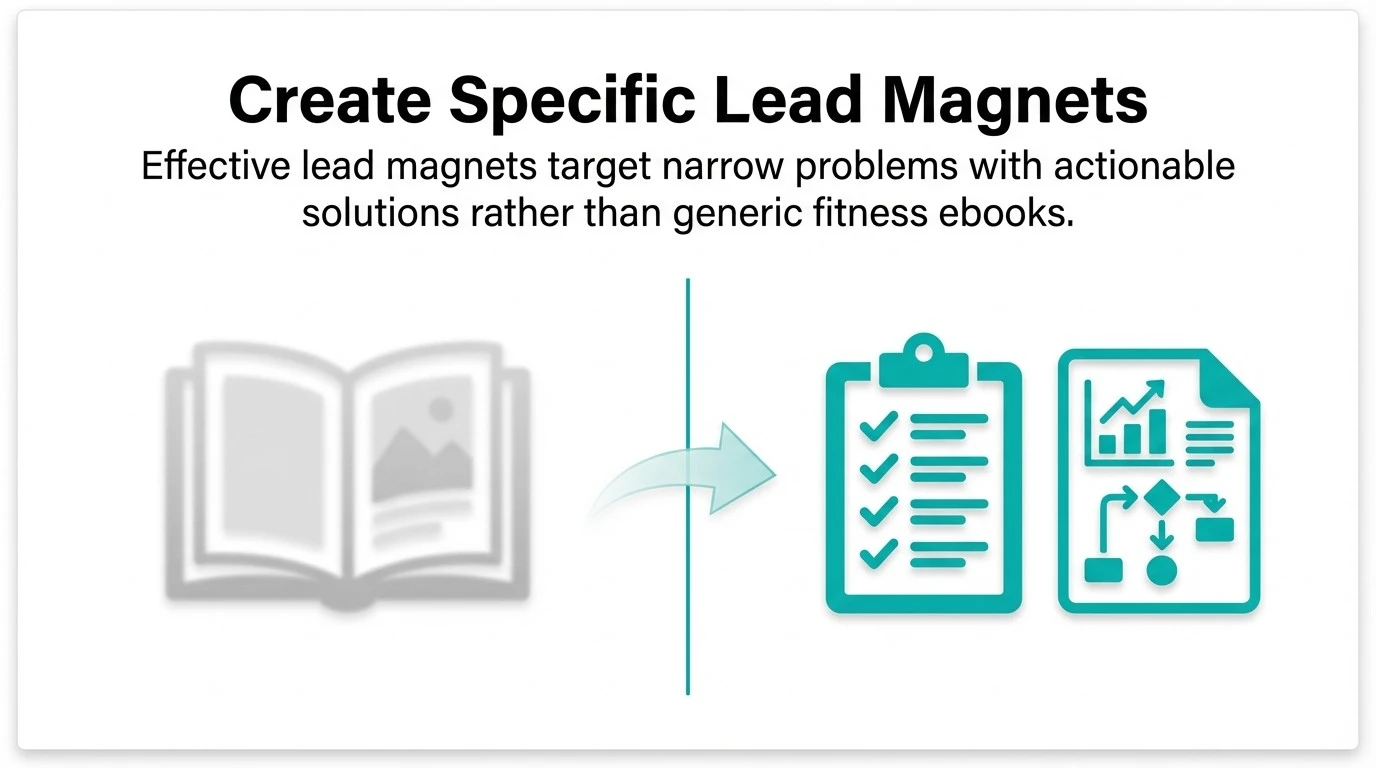
Generic fitness ebooks rarely work well. They lack specificity and don't address immediate concerns. Effective lead magnets target narrow problems with actionable solutions.
Examples that convert for personal trainers:
Your lead magnet should relate to your paid services. Someone interested in home workouts might eventually want in-person training. Someone downloading meal plans needs nutrition guidance.
For detailed strategies for creating effective lead magnets, see our guide to creating lead magnets for personal training businesses.
Every page on your website should include an email capture mechanism. Don't rely solely on a single sign-up form in your footer.
Place opt-in forms strategically:
Each form should communicate the specific benefit of subscribing. "Join our mailing list" lacks a compelling reason to join. "Get weekly workout tips delivered to your inbox" clearly explains the value.
Reduce friction by requesting only essential information. The email address alone suffices initially. You can gather additional details through welcome sequences or profile updates later.
Social platforms serve as top-of-funnel awareness channels. Use them to drive traffic to dedicated landing pages where visitors can join your email list.
Include your lead magnet link in profile bios. Reference it in relevant posts. Create content that naturally leads to the lead magnet as the next logical step.
For instance, share a post on proper squat form, then direct interested followers to download your complete form guide, which requires email registration.
Stories and reels work well for showcasing the benefits of lead magnets. Demonstrate quick wins from your content, then direct viewers to get the full resource.
Personal trainers interact with potential clients in physical spaces. These interactions provide list-building opportunities that online-only businesses lack.
Collect email addresses during:
Always clarify what subscribers will receive. Vague promises to "stay in touch" generate low-quality subscribers who never engage.
Specific expectations work better: "I'll send you a workout tip every Tuesday and monthly training offers." This clarity attracts engaged subscribers whilst deterring those unlikely to convert.
For a broader context on list building within your overall marketing approach, review our marketing strategies for personal trainers.
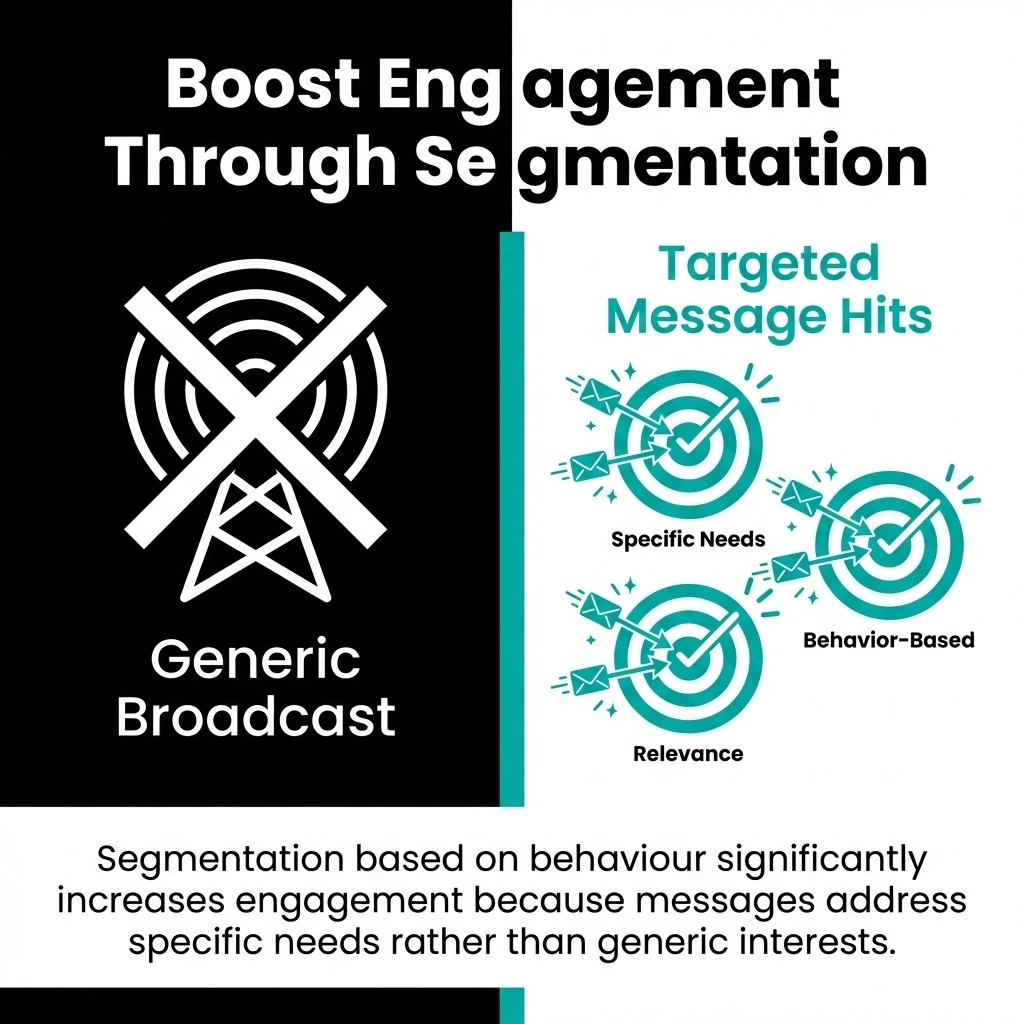
Sending identical emails to every subscriber wastes your list's potential. Segmentation based on behaviour significantly increases engagement because messages address specific needs rather than generic interests.
Segmentation becomes more sophisticated over time. Start with basic divisions, then refine as you learn subscriber preferences.
Three segmentation methods provide immediate value without requiring complex setup.
First, engagement level. Separate highly engaged subscribers who open and click regularly from those who rarely interact. Highly engaged subscribers receive more frequent communication and offers. Less engaged subscribers get re-engagement campaigns.
Second, fitness goals. Someone wanting weight loss needs different content than someone training for a marathon. Segment by stated goals to deliver relevant guidance.
Third, subscriber lifecycle stage. New subscribers need educational content and trust-building. Long-term subscribers benefit from advanced tips and exclusive offers. Past clients require re-engagement approaches.
Actions subscribers take reveal their interests and readiness to purchase. Track these behaviours to create targeted segments.
Link clicks indicate topic interest. If someone clicks multiple emails about nutrition, they're signalling interest in meal planning services. Follow up with nutrition-specific content and relevant offers.
Landing page visits show serious consideration. Someone who visits your pricing page but doesn't book is further along in the decision process than someone who's never checked rates. Send targeted emails addressing common objections.
Content downloads reveal specific challenges. Someone downloading a flexibility guide likely struggles with mobility. Subsequent emails can address this concern directly.
Start with manual segmentation before automating. Create tags or custom fields in your email software for key characteristics: fitness goals, engagement level, and client status.
Apply these tags based on form responses, link clicks, or manual updates after conversations. Over time, automation rules can apply tags based on behaviour.
Don't over-segment initially. Three to five segments suffice when starting. More segments mean more content to create and more complexity to manage.
As your list grows and you better understand subscriber behaviour, introduce additional segments. Let data guide segmentation decisions rather than creating arbitrary divisions.
Email sequences automate relationship building. Once configured, they run continuously, nurturing new subscribers whilst you focus on training clients.
Personal trainers benefit most from three core sequences that address different stages of the client journey.
The welcome sequence makes first impressions and sets relationship expectations. It typically runs for 5-7 days after someone joins your list.
Email one is delivered immediately after signup. Thank subscribers for joining, deliver the promised lead magnet, and set expectations for future communication.
Email two (day 2) shares your story. Explain why you became a personal trainer, your training philosophy, and what makes your approach unique. This personal connection builds trust.
Email three (day 4) provides quick-win value. Share a simple tip subscribers can implement immediately. Demonstrating value early increases engagement with future emails.
Email four (day 6) addresses common obstacles. Acknowledge the challenges your potential clients face. Show you understand their situation.
Email five (day 7) introduces your services. Now that you've provided value and built rapport, explain how you help clients achieve their goals. Include a clear call-to-action for booking a consultation.
When someone becomes a client, they enter a different sequence focused on successful program starts.
This sequence typically spans two weeks, bridging the gap between purchase and the first training session.
An immediate welcome email confirms their decision and provides the next steps. Include scheduling links, location details, and what to bring.
A pre-session email (day before the first training) reduces anxiety by clarifying expectations. Explain session structure, typical first-session activities, and how to prepare.
Post-session follow-up (the day after the first training) reinforces key points covered. Provide resources for exercises demonstrated and encourage questions.
The progress check-in (week 2) acknowledges early efforts and helps maintain motivation. Share relevant resources based on observed needs during initial sessions.
Subscribers who stop opening emails hurt your sender's reputation. Re-engagement sequences attempt to revive interest before removing inactive contacts.
Trigger this sequence when subscribers haven't opened emails for 60-90 days.
Email one acknowledges the silence: "I've noticed you haven't opened recent emails. My fault or yours?" Use humour to break the ice.
Email two (3 days later) offers a choice. Ask what type of content they prefer. Provide links to update preferences or pause emails temporarily.
Email three (5 days later) presents a special offer exclusively for inactive subscribers. Sometimes people need an incentive to re-engage.
The final email (7 days later) warns of removal from the list. Give one last chance to stay subscribed by clicking a confirmation link.
If they don't respond, remove them. Clean lists with engaged subscribers perform better than large lists with inactive contacts.
For more strategies on maintaining client relationships through email, explore our guide on building your email list.
Consistent email communication maintains relationships, but only when the content provides genuine value. Promotional emails alone lead to unsubscribes.
Effective email content balances education, entertainment, and occasional promotional messages.
Your subscribers want to improve their fitness knowledge. Educational emails position you as their trusted source.
Workout tutorials explaining proper form prevent injuries and improve results. Include photos or video links demonstrating key points.
Nutrition fundamentals help clients understand how their food choices affect their progress. Break down complex topics into digestible explanations.
Recovery protocols often get neglected. Share strategies for improving sleep, managing stress, and optimising rest days.
Exercise modifications address different fitness levels and physical limitations. Show how to adapt movements for various capabilities.
Fitness journeys include difficult periods where motivation wanes. Your emails can provide the encouragement that keeps clients progressing.
Client success stories inspire action. Share transformations with permission, focusing on the process rather than just results.
Mindset strategies help clients overcome mental barriers. Address common psychological challenges like perfectionism, fear of judgment, or inconsistency.
Progress measurement guidance shifts focus from scale weight to meaningful indicators. Teach subscribers to recognize non-scale victories.
Email communication doesn't have to be one-directional. Invite engagement and foster a sense of community via group coaching or group chats.
Questions and polls encourage replies. Ask subscribers about their biggest challenges, favourite exercises, or topics they want covered.
Member spotlights celebrate client achievements. Feature a different client monthly, sharing their story and lessons learned.
Behind-the-scenes content humanizes your business. Share your own training routines, challenges you're facing, or your business journey.
Sales emails work when they're relevant and spaced appropriately. One promotional email for every 3-4 value-focused emails maintains balance.
Program launches work well when preceded by content that addresses the problem your program solves. Build anticipation before announcing availability.
Limited-time offers create urgency, but overuse diminishes effectiveness. Reserve scarcity tactics for genuine situations.
Package options help subscribers understand service tiers. Explain what's included at each level and who each package suits best.
Manual email management becomes unsustainable as your list grows. Automation ensures consistent communication without constant attention.
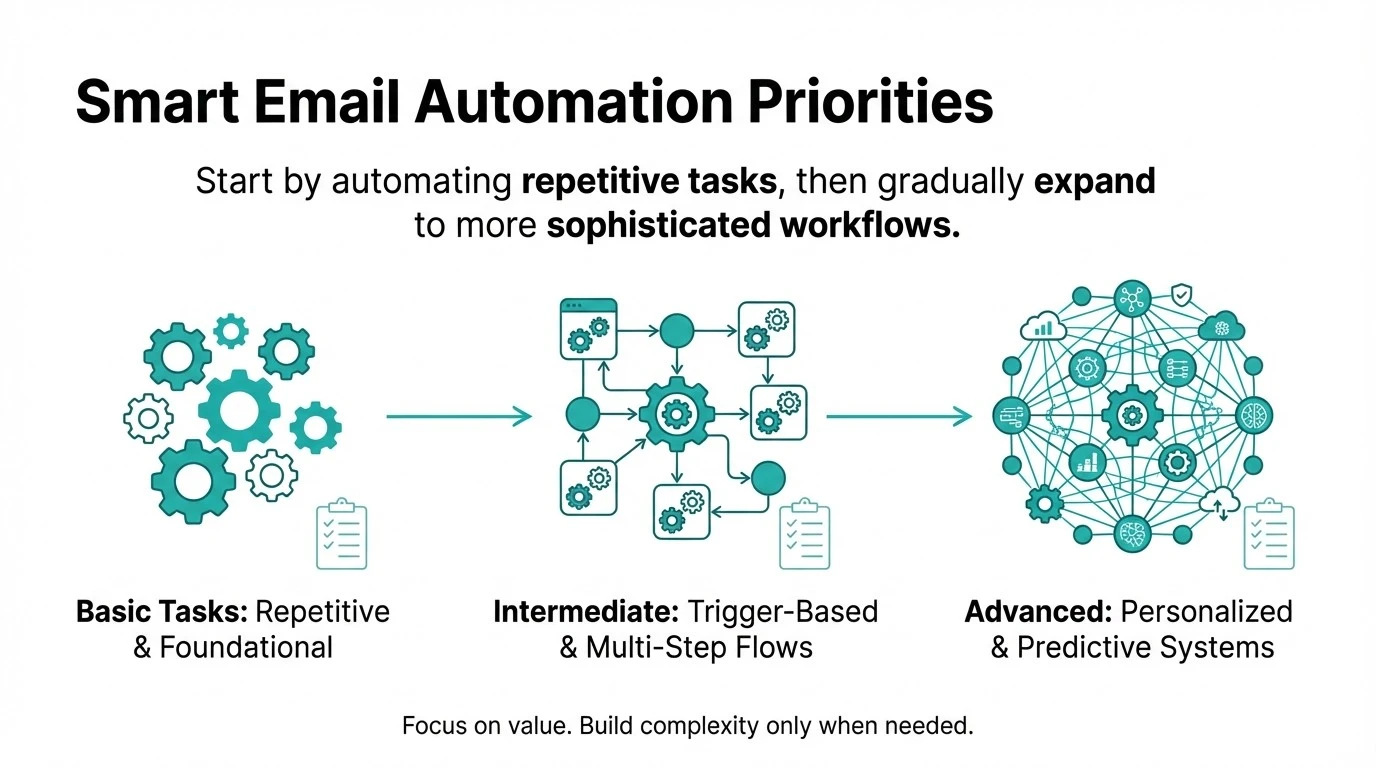
Start by automating repetitive tasks, then gradually expand to more sophisticated workflows.
Email automation uses triggers and actions. When a specific trigger occurs, the system performs predetermined actions.
Common triggers include:
Actions might include sending specific emails, adding tags, updating custom fields, or notifying you of important events.
Workflows combine multiple triggers and actions into logical sequences.
Example workflow: New subscriber joins list → Receives welcome email immediately → Gets tagged based on interest indicated in sign-up form → Enters interest-specific email sequence → After sequence completion, moves to general newsletter list.
Map workflows on paper before configuring them in software. Visual planning prevents logical errors and identifies gaps.
Test each workflow thoroughly. Subscribe to your own list with a test email address. Verify emails are sent correctly, triggers fire appropriately, and tags apply accurately.
Once basic automations work reliably, implement more sophisticated approaches.
Behavioural branching sends different content based on subscriber actions. If someone clicks a link about weight loss, they receive content on weight loss. If they ignore that email but click on strength training, they get strength content instead.
Lead scoring assigns points based on engagement behaviours. High-scoring subscribers receive different treatment than low-scoring ones. Your most engaged subscribers might get first access to new programs.
Lifecycle automation moves subscribers through stages automatically. New subscribers get educational content. Engaged subscribers receive offers. Clients get retention communication. Past clients enter win-back sequences.
For comprehensive guidance on automation alongside other digital marketing approaches, see our article on online marketing strategies.
Sending emails without measuring results prevents improvement. Clear goals, like improving open rates, enhance retention because you're actively working to strengthen performance rather than hoping for results.
Track key metrics to understand what resonates with your audience.
Four metrics matter most for personal trainers evaluating email performance.
Open rate indicates the effectiveness of the subject line and the sender's reputation. Low open rates suggest subject lines need improvement or subscribers don't recognize your sender name.
Click-through rate shows content relevance and call-to-action clarity. Subscribers opened your email but didn't take the desired action when click rates were low.
Conversion rate measures business impact. This might be consultation bookings, program purchases, or whatever goal you set for the campaign.
Unsubscribe rate signals content mismatch or frequency issues. Occasional unsubscribes are normal. Spikes indicate problems requiring attention.
Subject lines determine whether subscribers open emails. Small improvements here create disproportionate impact.
Test different approaches systematically. Try question-based subjects versus statement-based. Test curiosity gaps versus clear benefit statements. Compare personalized subjects with generic ones.
Most email platforms offer A/B testing. Send two subject line variations to small portions of your list, then send the winner to the remaining subscribers.
Keep subject lines under 50 characters. Mobile email clients truncate longer subjects, potentially cutting off key information.
Email body content requires ongoing refinement based on subscriber response.
Analyse which content types generate the highest engagement. If workout videos consistently outperform written exercise descriptions, create more video content.
Review click patterns on links within emails. Which calls-to-action work best? Where should you place important links?
Test email length. Some audiences prefer brief emails, others engage more with comprehensive content. Your subscribers' behaviour reveals their preference.
Mobile optimisation isn't optional. Most subscribers read emails on phones. Preview how emails appear on small screens before sending.
When you send emails affects open rates. Test different send times to identify when your subscribers are most responsive.
Frequency balance prevents overwhelming subscribers whilst maintaining regular contact. Start conservatively with one email weekly, then adjust based on engagement data and unsubscribe rates.
Some personal trainers successfully send daily emails. Others find twice monthly works better. Your specific audience determines the right frequency.
Email marketing generates revenue when approached strategically. The goal isn't aggressive selling but rather helping subscribers make informed decisions about your services.
Promotional emails work best when they follow substantial value delivery. Someone who's received helpful content for weeks is more receptive to offers than someone bombarded with constant sales pitches.
Build credibility through educational content before introducing paid services. Demonstrate expertise first, sell second.
Frame offers as solutions to problems you've already discussed. If recent emails have addressed nutrition challenges, promoting a meal-planning service feels like a natural next step rather than an abrupt sales push.
Successful sales emails follow a proven pattern.
Start by acknowledging the subscriber's challenge. Show you understand their situation and why they're struggling.
Explain your solution clearly. What specifically will they receive? How does it address their challenge?
Provide social proof. Share the results that previous clients achieved. Include testimonials that speak to common concerns.
Create clear next steps. Don't make subscribers hunt for how to take action. Prominent call-to-action buttons guide them forward.
Address obvious objections proactively. If price is typically a concern, explain the value. If time commitment worries people, clarify realistic expectations.
New program launches benefit from dedicated email sequences that build anticipation and educate subscribers about offerings.
Pre-launch content introduces the problem your program solves. Share content that makes subscribers recognize they have this problem and it's worth addressing.
Launch announcement explains what's available, who it's for, and how it helps. Include clear pricing and a breakdown of what's included.
Follow-up emails address different objections and highlight various aspects. One email might focus on testimonials, another on specific program components, another on time investment.
A last-chance email creates urgency when you're using limited enrollment or time-bound offers. This works only when scarcity is genuine.
Between major launches, maintain subtle awareness of your services through regular emails.
Include brief service mentions in educational emails. After sharing a workout tip, add: "Want personalized programming? Here's how we work together."
Signature blocks in every email can include service information and booking links. This passive promotion requires no additional content but keeps services visible.
For related content marketing strategies that complement your email efforts, review our guide on content marketing for personal trainers.
Initial setup is straightforward. Long-term consistency separates successful email marketing from abandoned efforts.
Prevent burnout by building repeatable content processes.
Batch content creation works well for email marketing. Dedicate one day monthly to writing multiple emails. Schedule them in advance rather than writing each email the day you send it.
Content frameworks provide structure. Develop templates for different email types. Educational emails might follow: Problem → Explanation → Solution → Action. Motivational emails might use: Story → Lesson → Application.
Repurpose existing content. Blog posts become an email series. Client questions inspire educational emails. Social media content expands into longer email formats.
Maintaining list quality improves deliverability and engagement rates.
Remove inactive subscribers periodically. After re-engagement attempts fail, delete contacts who haven't opened emails in 6 months. This improves overall metrics and sender reputation.
Monitor bounce rates. High bounce rates harm deliverability. Remove email addresses that consistently bounce.
Honour unsubscribe requests immediately. Keeping people subscribed against their wishes damages reputation and potentially violates regulations.
Email marketing effectiveness improves through systematic testing.
Test one variable at a time. Changing multiple elements simultaneously prevents identifying what drove the results.
Give tests a sufficient sample size. Single-email results can be misleading. Look for consistent patterns across multiple sends.
Document everything. Maintain a testing log, noting what you tried, the results observed, and the conclusions drawn. This prevents repeating failed experiments and helps identify trends.
Email marketing works best when it becomes part of your regular coaching workflow rather than an occasional marketing task. The trainers who see consistent results aren’t necessarily the ones who send the most emails—they’re the ones who show up reliably, share useful content, and build genuine relationships with their audience over time.
A simple system makes this sustainable. Plan your emails in advance, repurpose content from client questions or social posts, and use automation to deliver key messages like welcome sequences, onboarding emails, and re-engagement campaigns. Once these systems are in place, your email marketing continues working in the background while you focus on coaching.
Over time, your list becomes one of your most valuable business assets. It connects you directly with people who trust your advice, follow your guidance, and are far more likely to become long-term clients.
If you want to manage client communication, automate your email marketing, and deliver programmes all in one place, PT Distinction makes it simple.
Start your free 1-Month free trial of PT Distinction today and see how integrated software can help you streamline your email marketing while growing your personal training business.
Ready to join the family?
We'll get you up and running in no time. Start with our zero-risk free trial and build your personal training empire today.